
Burnout is not the end. We help social workers restore vitality and find new growth.
Burnout is a problem that was exacerbated by the pandemic. The remedies before and now have not been sufficient.

The stubborn persistence of burnout has created an opportunity for researchers, practitioners and educators to discover new methods for addressing burnout—precisely what our team does.
Since 2020, we have published extensively on our novel approach to burnout. We’ve conducted presentations at national conferences, consulted with the Veterans Affairs’ National Workgroup, and presented at a TedX-style talk at CSWE.

Burnout is a rupture in the relationship between our idealized social work and the real social work.
We internalize ideals about the kind of social worker we want to become, what we actually realize in our current social work practice, and what we wish for ourselves and our clients:
“I want to be an advocate.”
“I want to create a just society.”
“I want to help clients overcome adversity.”
“I want my job to provide purpose and pay well.”
And the list goes on…

Our social work ideals became paired with one or more of the following feeling states—shame, guilt or pride. We feel ashamed or guilty for not reaching the ideal, or proud that we did. A lack of pride, or low social work self-esteem, and the presence of shame and guilt feelings, are often our most common burnout symptoms . We start thinking “nothing will work” or “I can’t do this” and then the feeling and thought leads to an action: quit the job and/or leave the profession.

Restoration is a repair of the ruptured relationship between our ideal and our real social work selves.
To heal the rupture, repair takes time, mental and physical space. The amount of time and mental work depends upon the intensity of the rupture—mild, medium, or hot.
Restoring a feeling of pride and meaning in your work is our goal. Our consultation and coaching services are aimed at preventing burnout, repairing the rupture, and restoring your vitality.

Is Your Burnout Mild, Medium, or Hot?

Mild
It’s your first internship or employment and it doesn’t turn out like you expected. You wonder: is social work right for me?

Medium
You have been working for sometime and are satisfied with your career choice, but disappointments mount between what you hoped for and the real. On some days, you daydream of finding a new job...

Hot
Disappointment turns to dread. You say to yourself: “I want out of here.” You think that all the bridges have burned between the imagined and the real. You long for work that is realistic and no longer feels disappointing and draining.
We’ve made it our mission to restore your path forward.
We have a deep appreciation for what social workers have endured and continue to endure during these unprecedented times.
With over 80 years of combined experience across social work, education and research, our team is passionate about helping social workers and organizations grow and blossom after burnout.
Our noteworthy contributions to the field include an intervention to facilitate social worker wellbeing, underlying factors of burnout unique to many social workers that emerged during the pandemic, and navigating burnout recovery and restoration, among others.

We Offer Pathways to Restoration
-
Burned out social workers believe the “IDEAL” is REAL. When they don't achieve it, burnout intensifies, leading to feelings of resentment, shame, and anger, all of which result in a wish to leave, rather than stay. Our coaching philosophy focuses on addressing and minimizing the gap between the IDEAL vs. the REAL.
We help social workers assess the intensity level of their burnout (mild, medium or hot) and take inventory of all the cognitive, emotional, and physical stressors weighing on their psyche (job demands, past trauma, etc.) Our coaches work with social workers individually or in online support groups to renegotiate a balance between demands and resources to restore their professional vitality.
Fees: $50 online support group | $75 online individual session per hour.
-
Research shows that the cost of turnover to an agency is 2-3 times the cost of one provider’s salary (Singh, 2021). Additionally, there is an expected workforce deficit in the profession until at least the year 2030. To improve retention, leadership and frontline workers need to share the ideals that drive the organization's particular mission, with a keen awareness of the gaps that will always exist between the IDEAL and the REAL.
We conduct leadership and staff webinars that focus on our burnout/restoration model and everyday interventions to restore the organization's and workers’ commitment to excellence and improve retention. We customize the consultation/webinar to fit your particular organizational needs.
Fees: $1500.00 per 90 minute session
-
Our synchronous webinars are approved for continuing education licensing requirements. Through our webinars, we not only address burnout (what it is, what leads to it), but also how to recover from it.
We reframe burnout within the context of social work education as well as this novel, post-pandemic era. We teach the application of emotional preparedness strategies to facilitate wellbeing, and show how restoration is the next step in burnout recovery. Our continuing education courses are appropriate for social work educators, practitioners, leadership, students and future social workers.
Fees: $1500-2500.00 depending on length of webinar session.
-
We staff and design one-hour credit, online, synchronous courses for schools of social work that build restoration prevention skills for future social workers.
The course reviews social work burnout research, our burnout/restoration inventory method, emotional preparedness strategies, and a theoretical and practical model for understanding burnout. The overall aim is to remove the stigma and shame of burnout and prepare students to negotiate and manage burnout when (not if) it occurs in their future work experiences.
Fees: Negotiable depending upon the number of students in each online course.
Meet Our Team
-

Dr. Jerry Floersch
Ph.D., LCSW
Professor Emeritus (2022), Rutgers University School of Social Work. He is the author of Meds, Money, and Manners: The Case Management of Severe Mental Illness, published by Columbia University Press (2002) and a co-author of Qualitative Methods for Practice (2012).
After earning a master’s degree in social work from the University of Kansas (1977), Jerry practiced social work in various fields of practice, from substance abuse, emergency services, and administering a mental health crisis service to playing a key role in developing and implementing housing policies and programs for adults suffering from severe mental illness. In 1999, he earned a PhD. from the University of Chicago. He then taught, conducted research, and extensively published until his retirement from the university. Jerry currently has a clinical practice in Lawrence, Kansas.
-
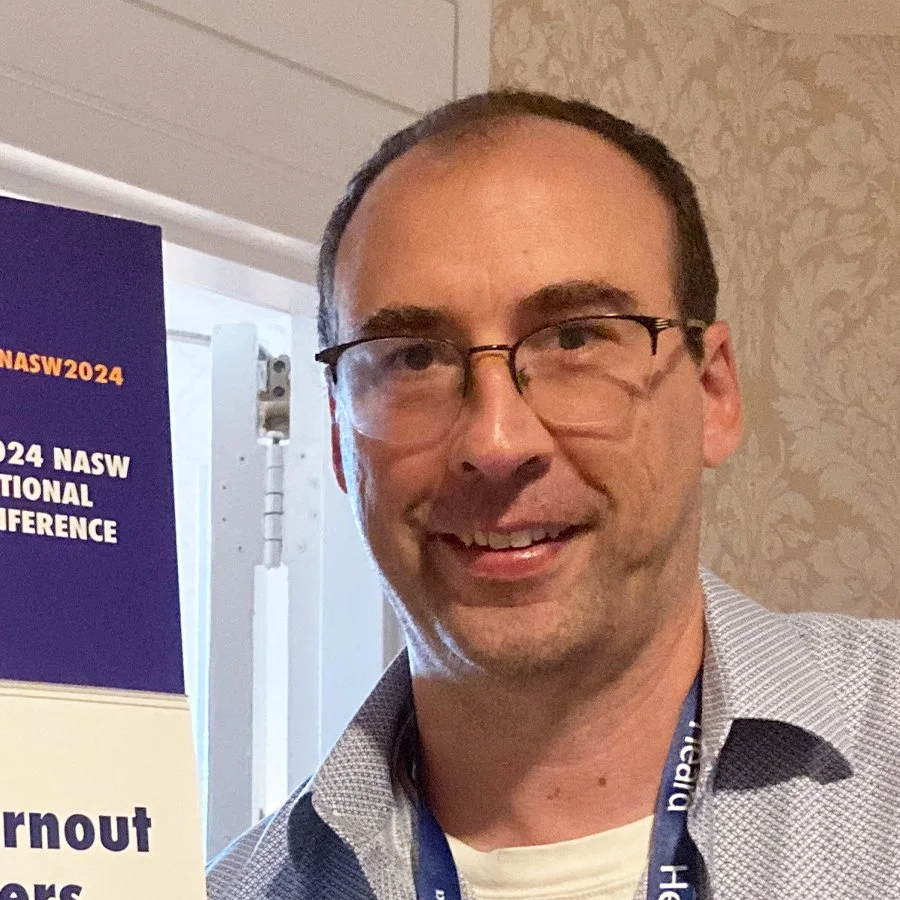
Derrick Kranke
Ph.D.
Derrick Kranke earned his PhD in Social Welfare from the Mandel School of Applied Social Sciences, Case Western Reserve University, in 2009. Derrick was trained as a qualitative researcher by Dr. Jerry Floersch. Derrick’s research roots of empowerment began with his research experience with veterans experiencing PTSD.
The COVID-19 pandemic catapulted his research on social workers and the novel experience of burnout. His burnout work involved collaborations with multiple VAs across the nation, numerous clinical researchers throughout prestigious universities in the US.
Additionally, Derrick has teaching experience at numerous national universities. Dr. Kranke received the CSWE/SAGE award for innovation in research instruction, and he was inducted into the Mandel School Hall of Achievement.
-

Bridget Kranke
LSW
Bridget Kranke, MSSA, graduated from the Mandel School of Applied Social Sciences, Case Western Reserve University, in 2008. Her experience includes working in non-profit, government, and public education settings. As a social worker, she assisted populations including children, youth, and families; individuals with severe mental illness; and Veterans experiencing homelessness. Her current work includes coordinating a variety of health services research projects at the VA Greater Los Angeles Healthcare System to help improve services for Veterans where she has been trained to conduct qualitative interviews and data analysis.
She has guest lectured with Derrick for social work master’s courses that address issues of diversity in Theories of Oppression and Social Work with people with serious mental illness. Additionally, she presented with Derrick about social worker burnout at the 2024 NASW national conference and conducted a live webinar with the Society for Social Work Leadership in Healthcare for the Fall 2024 CE program. She has numerous publications with Derrick on issues of burnout in social work journals.
Her practice expertise has led to her passion for social worker burnout research. She is well-versed with issues related to privilege and oppression. Her experience with PTSD and burnout in multiple work settings has encouraged her to help others recover from burnout.
Publications
Countering Burnout Associated with Teleworking in This Postpandemic Era
Introducing Trauma Trigger Fatigue as an Underlying Factor of Social Work Burnout
Letter to the Editor: We Cannot Have Next Year If We Do Not Take Care of Today
Letter to the Editor: We Cannot Have Next Year If We Do Not Take Care of Today
Applying a Novel Approach to Understanding Social Worker Job Retention during the Pandemic
Social Workers Being Effective in Disaster Settings
VA social work leadership and compassion fatigue during the 2017 hurricane season

Take our Burnout Inventory
Our inventory is a completely anonymous, free tool to help you discover what you’re missing from your personal restoration toolkit. The inventory will help you assess if your burnout is mild, medium, or hot. Give it a try.

